Cyber Essentials for Charities & Non-Profits across the Midlands
Protect donor financial transactions, safeguard sensitive beneficiary case files, and secure unmanaged volunteer personal devices from advanced social engineering.
Donor Trust, GDPR Compliance, and Information Asset Auditing
Charities are prime targets for cyber criminals because they handle high volumes of sensitive personal data (PII) and financial donations, often without full-time IT security staff. Under the UK General Data Protection Regulation (UK GDPR) and Data Protection Act (DPA 2018), trustees must enforce strict data boundaries and maintain an up-to-date Information Asset Register mapping all personal, donor, and beneficiary data. Achieving Cyber Essentials validates the technical perimeters guarding these critical assets, reassuring grant bodies and the public that funding and data are secure.
The Volunteer & BYOD Challenge
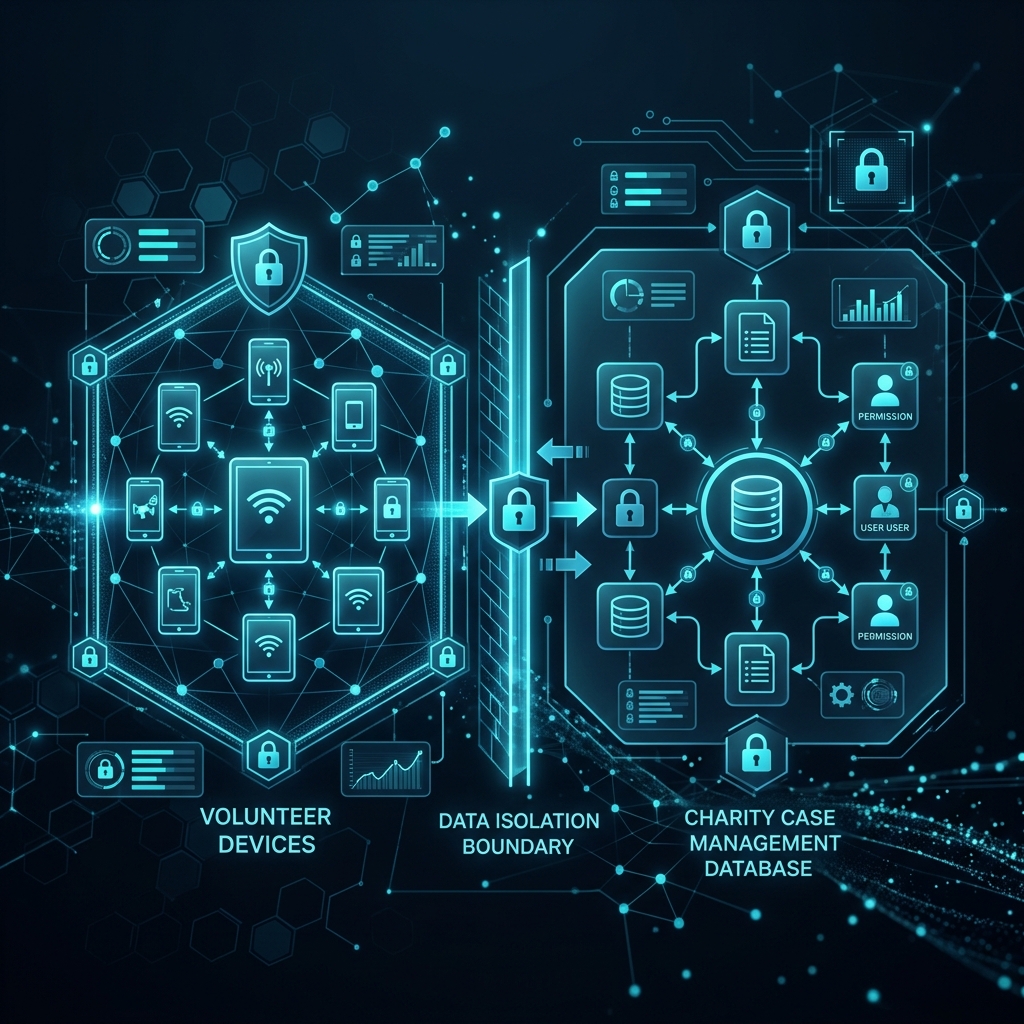
Securing a charity is uniquely complex due to a revolving, temporary volunteer workforce. Unlike employees, volunteers rarely undergo structured IT training, access cloud databases using unpatched personal laptops (BYOD), and lack centralized corporate accounts.
SafeWatch helps you configure lightweight Mobile Device Management (MDM) rules and session limits to isolate database access, securing your endpoints without compromising personal privacy.
Critical Cyber Hazards Targeting Charities
Criminals exploit the trust-oriented, high-activity non-profit sector:
Spear-Phishing & CEO Donation Scams
Phishing campaigns that mimic trustees or CEOs to trick finance coordinators into transferring charity programme funding to overseas criminal accounts.
Exfiltration of Sensitive Beneficiary Records
Targeting vulnerable non-profit servers to steal confidential beneficiary files (health status, family records, housing) to blackmail families or sell data.
Donation Portal & Website Defacement
Hijacking website domains or injection of malicious code into online donation forms to skim credit card details directly from generous donors.
NCSC Charity Board Toolkit Scoping & Assessor Verification
Our team of industry experienced assessors works directly with charity trustees and boards to bridge the gap between compliance and mission safety. SafeWatch aligns your operational policies with the NCSC Charity Board Toolkit recommendations. We help you establish compliant boundary scopes, verify your UK GDPR Information Asset Register, audit cloud identity access (MFA), and align volunteer BYOD policies to ensure your charity secures compliance smoothly at fixed SME rates.
How Unpatched Volunteer Devices Lead to Data Breach
The Incident: A mid-sized UK support charity suffered a major data breach when an attacker compromised a volunteer’s unpatched personal tablet (BYOD) via a simple phishing email. The attacker extracted cached administrative login credentials for the charity's main cloud case-management database, which lacked Multi-Factor Authentication (MFA). This resulted in the theft of 1,200 sensitive beneficiary case files and a mandatory reporting fine under UK GDPR/DPA rules.
How Cyber Essentials Would Have Prevented It:
- Multi-Factor Authentication (MFA): Stolen cached credentials alone would be useless without a second factor, blocking access to the cloud database.
- Patch Management & System Updates: Cyber Essentials forbids any device running unsupported or unpatched software from accessing organisational systems. Automatic updates on the volunteer's tablet would have blocked the initial browser exploit vector.
- Secure Configuration & Scope Isolation: Restricting user accounts to local standard profiles rather than administrative privileges limits the damage from compromised BYOD credentials.